Navratri is a sacred time dedicated to Jagadamba (Shakti), celebrated over nine days, followed by Vijayadashami on the tenth day. For me, these days are an opportunity to connect with the Divine Mother, follow our family traditions, and reflect on ourselves.
I would like to share a few moments from this year's Navratri celebrations and what this special time means to me.
Simple Pooja and a Prayer from the Heart
I believe that pooja does not have to be elaborate. What matters most is the devotion with which we pray to Jagadamba.
I believe Shakti is Chaitanyam (divine consciousness) that exists in every bit of this world and extends beyond it. With this belief, our daily pooja during Navratri remains simple, with the Ashtottara Namavali of the respective forms of Devi and an offering of naivedyam.
My prayer to Jagadamba is always to bless me with the Shakti to overcome my ahankar (ego), anger, irritation, and other inner weaknesses.
We often ask God for many things, but I feel that one of the most important things we can ask for is the strength to improve ourselves. God has already given us so much, and we must learn to be grateful and remain humble.
Seeking the Strength to Overcome the Arishadvargalu
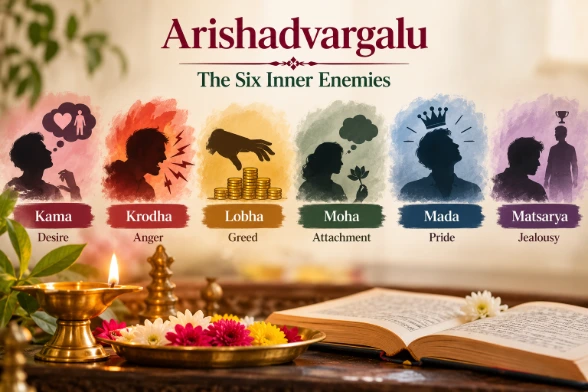
The Arishadvargalu are the six inner enemies: kama (desire), krodha (anger), lobha (greed), moha (attachment), mada (pride), and matsarya (jealousy).
As human beings, we all experience these tendencies in one form or another. Sometimes, we recognize our mistakes and make an effort to change, only to find ourselves falling back into the same patterns when faced with similar situations.
Overcoming these inner weaknesses is not something that happens overnight. It requires continuous effort and self-reflection. This is why I feel that seeking the Divine's help to become better human beings is more meaningful than asking only for material things.
Bommala Koluvu and Our Family Traditions
One of the traditions we follow during Navratri is Bommala Koluvu, in which we arrange different kinds of dolls at home. A kalasam representing Jagadamba is also placed, and diyas are lit at the koluvu every day.
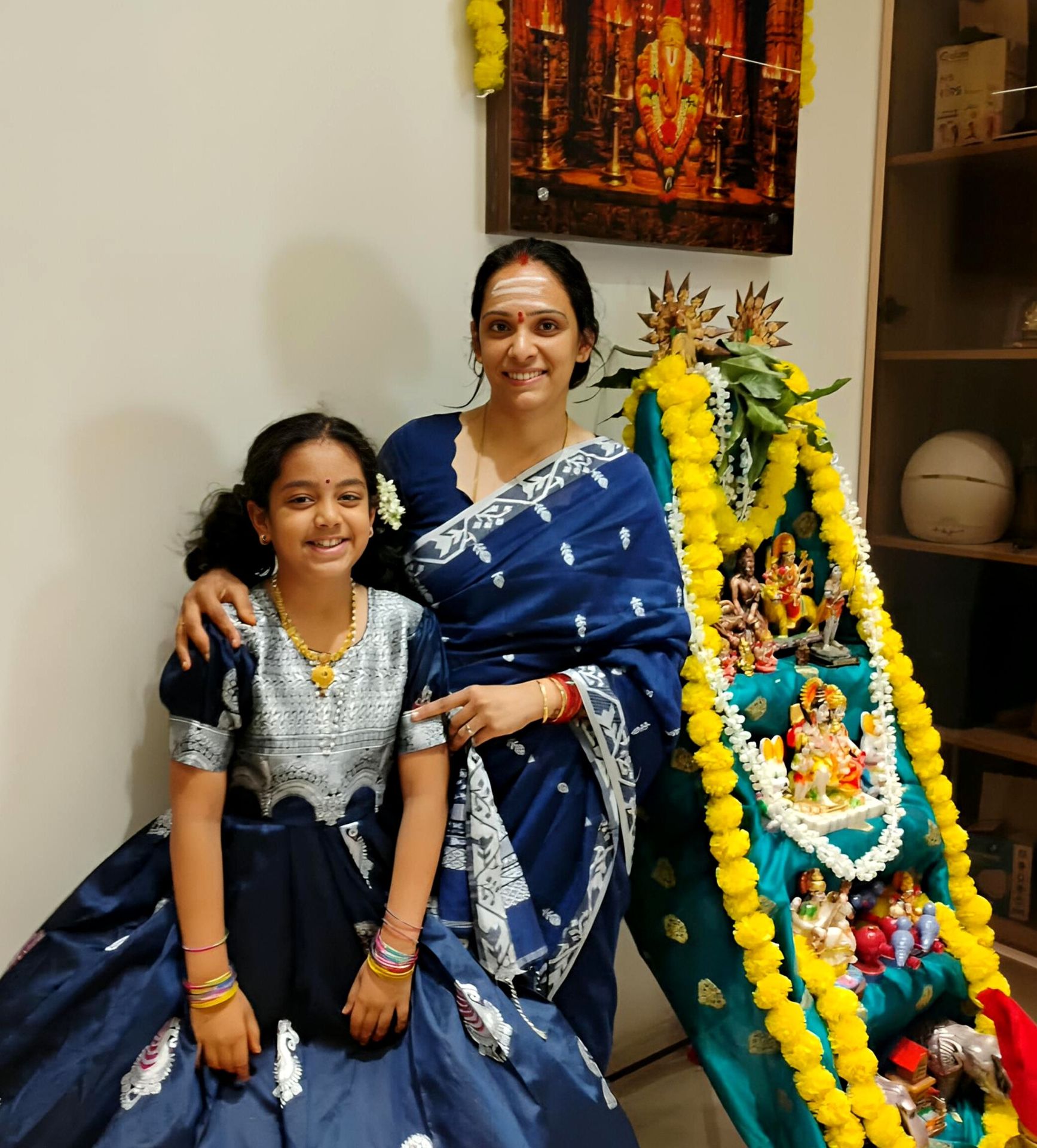
The Devi worship followed in our home is a tradition my mother has been practising for many years. Each day is dedicated to a different form of Devi:
Day 1: Bala Tripura Sundari
Day 2: Gayatri Devi
Day 3: Annapurna Devi
Day 4: Lalitha Devi
Day 5: Mahalakshmi
Day 6: Gowri Devi
Day 7: Saraswati Devi
Day 8: Durga Devi
Day 9: Mahishasura Mardini
Following the traditions passed down by our elders gives us an opportunity to remain connected to our roots and carry them forward to the next generation.
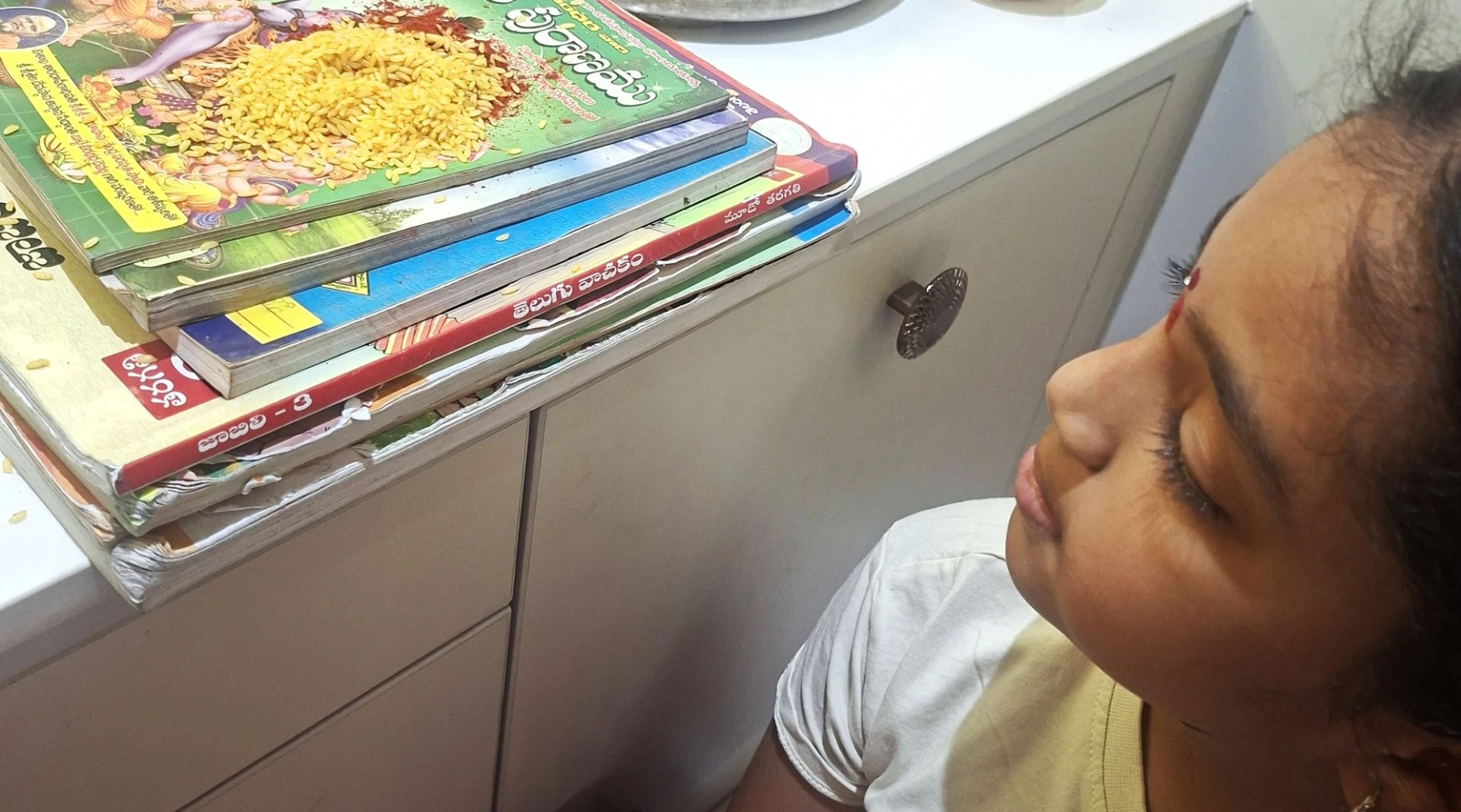
Sahasranjali also joined the celebrations by participating in Saraswati Pooja and offering prayers to her books for two days. It was a lovely way for her to be part of the traditions we follow at home.
Vijayadashami: The Joy of Sharing Tamboolam
On the ninth day of Navratri, my mother visited us, and she received the first tamboolam. She holds a special place in both Sahasranjali's and my life, so it was meaningful to share this tradition with her.
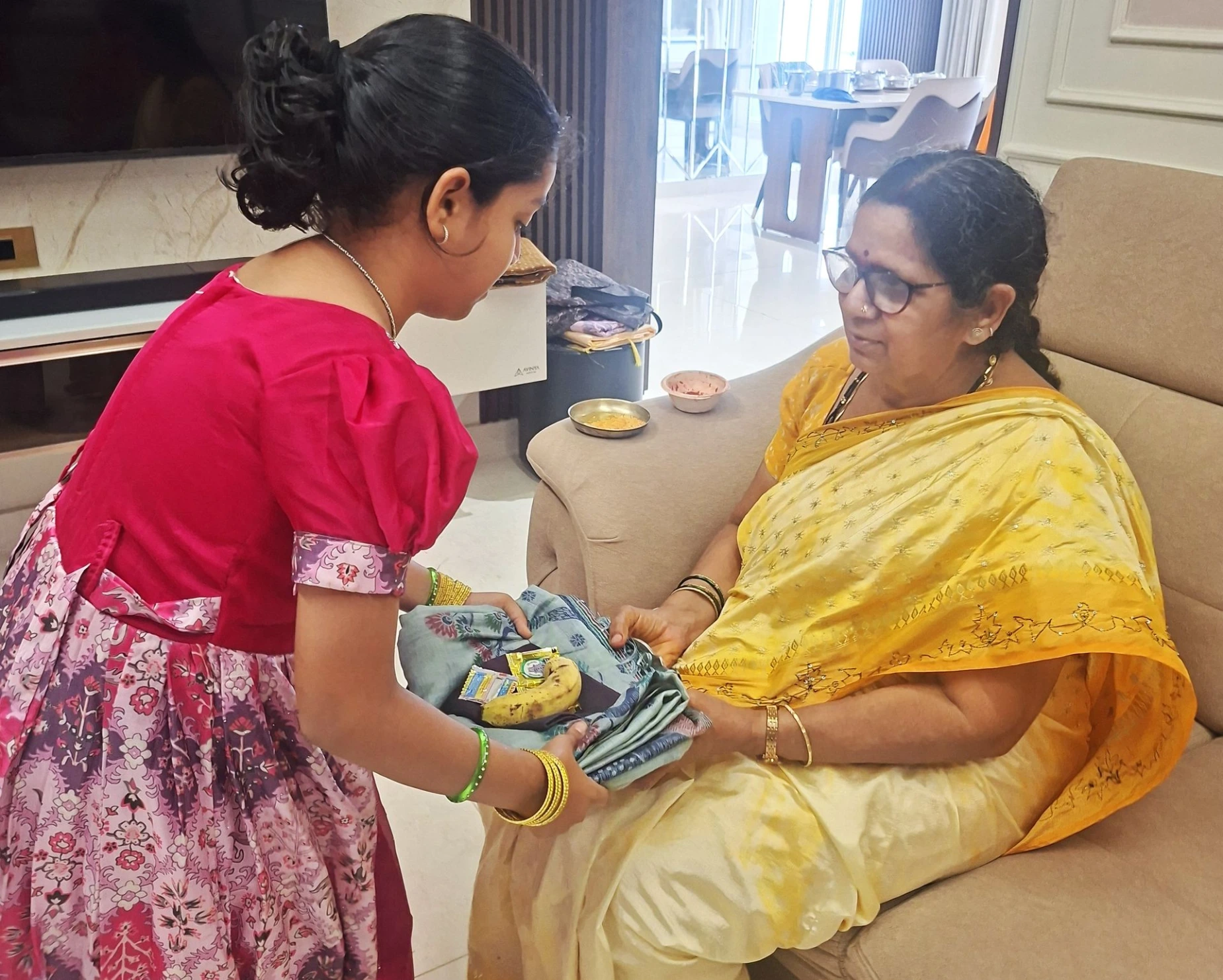
On Vijayadashami, Sahasranjali invited her little friends home for the evening tamboolam. In our tradition, little girls are considered manifestations of Jagadamba herself. Offering them tamboolam, along with small gifts such as stationery and chocolates, is one of the ways we celebrate this belief during Bommala Koluvu.
Two women also visited our home for tamboolam.
I hadn't expected anyone to visit, so having two women and six children at home made the place feel so lively. Their presence brought me so much happiness, and I felt grateful to Jagadamba for bringing this joy into our home.
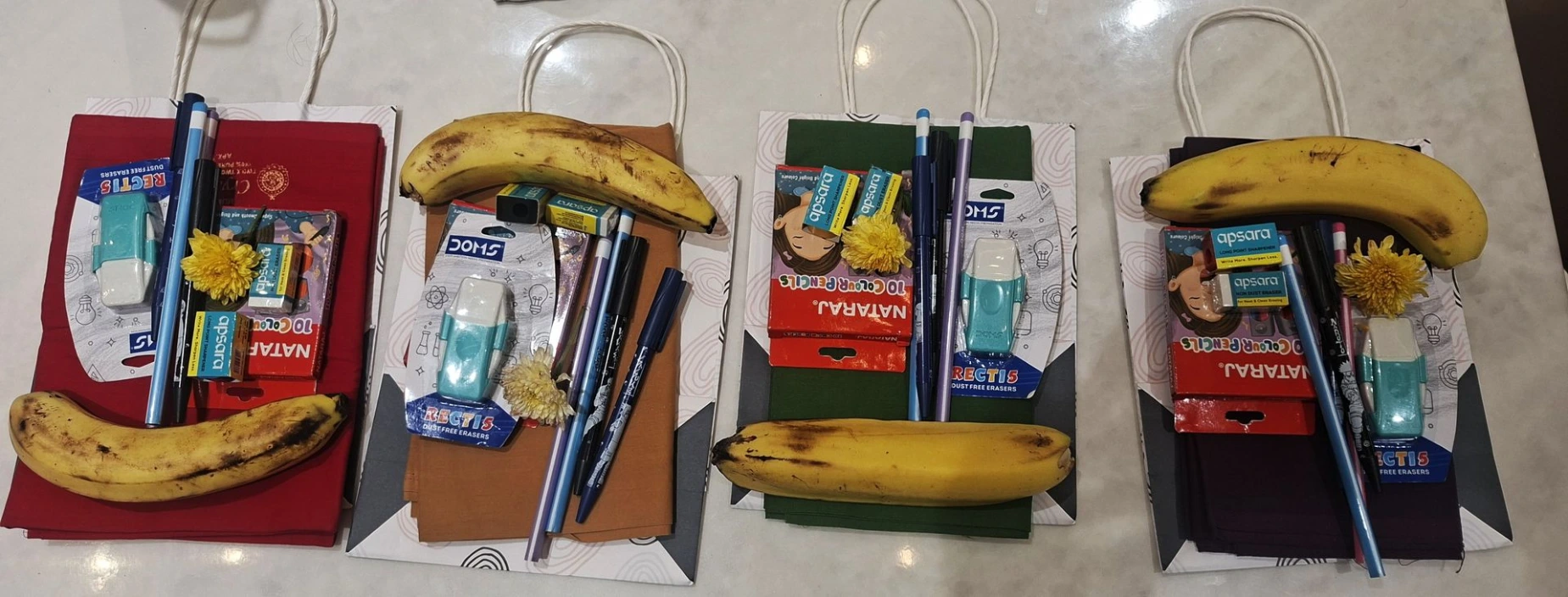
Looking back, I feel blessed that I could celebrate Navratri and Vijayadashami in the way I had hoped. I am thankful to Jagadamba for giving me the strength and opportunity to observe these traditions.
Sahasranjali also had the opportunity to offer tamboolam to the women and girls who visited, allowing her to participate in and experience this tradition.
A Feeling of Peace and Gratitude
As I look back on these nine days and Vijayadashami, what stays with me most is the sense of peace I experienced and the feeling of Shakti.
For me, Navratri is a time to reconnect with the Divine, appreciate our traditions, and reflect on the person we are becoming. This year's celebrations also gave me an opportunity to share these traditions with my daughter and experience the joy of having family and little guests at home.
I feel grateful to Jagadamba for these experiences. My prayer is that she continues to guide us and bless us with the strength to overcome our inner weaknesses.
Jai Jagadamba!